
Victron · 48 V ESS · price-aware dispatch
Victron Multi RS, RS19 Solar and Dynamic ESS for business
Multi RS is a lightweight 48 V platform for retrofit storage, backup and controlled self-consumption. RS19 Solar adds a rack format and two independent MPPTs; the real system value comes from metering, GX control and a verified battery.
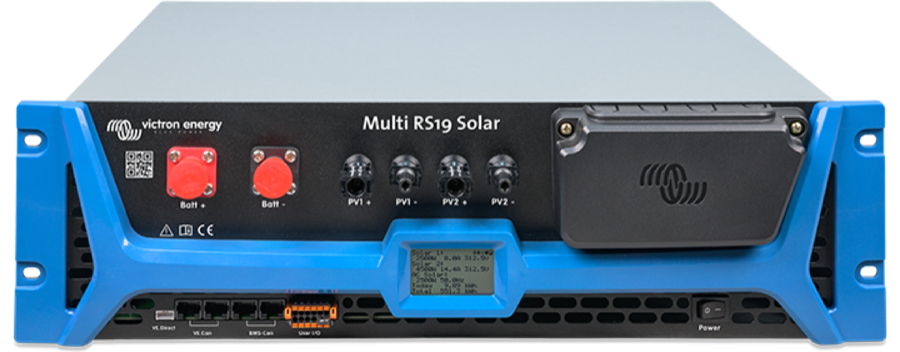
Decision snapshot
This is not a retail bundle or a blanket compatibility claim. Components are candidates; only the project specification is binding.
Decision page · updated September 2026
What the technology or architecture actually solves
The Multi RS 48/6000 without solar inputs fits battery retrofits with existing PV, external MPPTs or AC-coupled solar. Multi RS19 Solar combines a 48 V/6 kVA inverter/charger with two independent 3 kWp MPPTs in a 19-inch form factor; each tracker accepts 65–450 V DC. Final strings still require cold-temperature Voc, current and service-isolation checks.
A manufacturer bulletin from August 2026 added the new Multi RS to Venus OS 3.79 with Dynamic ESS, configurable minimum SOC, AC input-current limit, generator warm-up/cool-down and dedicated Node-RED flows. Multi RS firmware 1.32 is important for Dynamic ESS because it corrects energy counters used by the forecasting algorithm.
Practical business scenarios
battery retrofit behind an existing commercial PV plant
small facility with zero export and selected backup loads
dispatch against spot prices and solar forecasts
rack-mounted off-grid systems with different array orientations
Control and automation
Dynamic ESS uses forecasts and prices, not certainty. We define guardrails: emergency SOC, maximum import, no-cycle windows, power ceilings and behaviour when price or weather data is unavailable. Node-RED can add site logic such as blocking charge before a known production peak or pre-charging before planned maintenance.
Weak points we test
A common weakness is overestimating arbitrage value while ignoring losses, degradation and network charges. We separately verify that price optimisation does not consume the reserve promised for continuity: the same battery cannot be empty for trading and full for a long outage.
Legal, regulatory and data context
Price- or power-driven dispatch changes the operating profile. We review connection limits, metering, export, data responsibility and storage regulation, and include firmware and remote control in operating and cyber documentation.
Frequently asked questions
Is Dynamic ESS automatically profitable?
No. Tariffs, conversion losses, degradation, grid charges and forecast quality must be simulated first.
Can Multi RS operate without a battery?
Some grid-connected scenarios are supported, but functions, certification and firmware must be confirmed for the exact project.
Primary sources and fact check
Product data, firmware, certification and compatibility change. The exact model, revision, market and current documentation are reconfirmed before a binding design.
Related commercial and regulatory context
Related decision maps
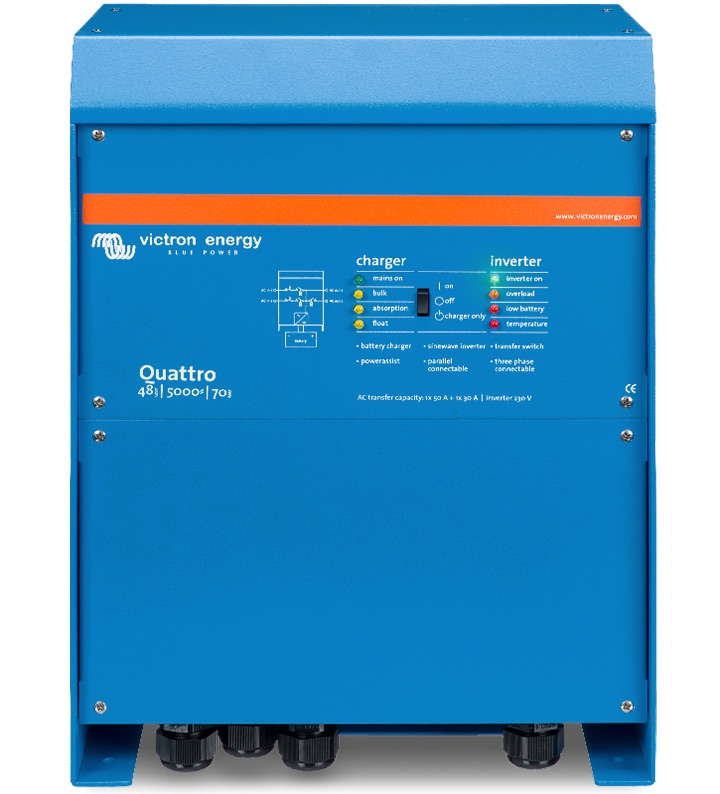
Victron · dual AC sources · controlled resilience
Victron Quattro for commercial ESS and backup systems
Quattro is not a complete battery system. It is a powerful building block for projects that must coordinate the grid, a generator, batteries, solar and critical loads without…
Open decision page →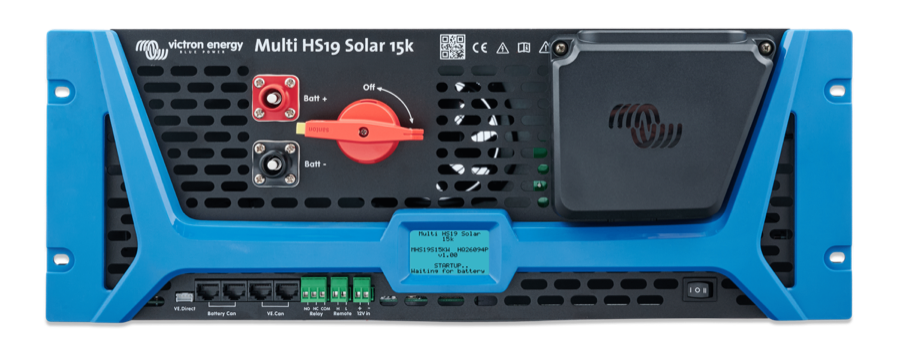
Victron · high voltage · three-phase ESS
Victron Multi HS19 Solar 15 kW for commercial BESS
Multi HS19 Solar 15k brings the Victron ecosystem into a high-voltage three-phase architecture. It is a candidate for compact C&I ESS only when the exact battery voltage window,…
Open decision page →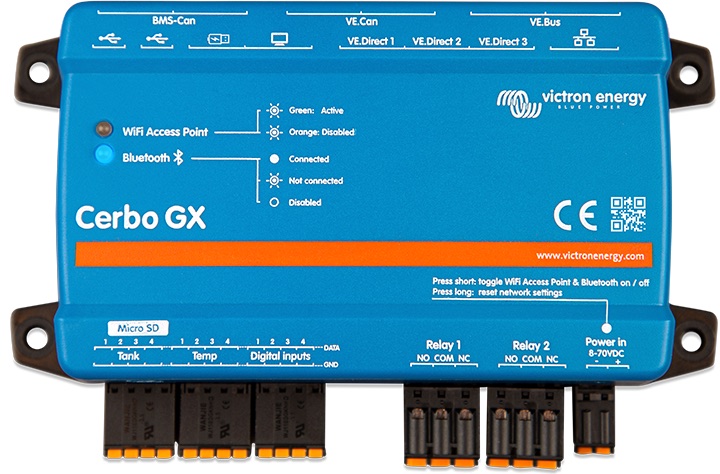
Venus OS Large · local automation · EMS
Victron GX and Node-RED for business energy automation
Cerbo GX, Nucleo GX and Venus OS Large can connect energy data to local Node-RED automation. The value is not a colourful dashboard; it is measurable operating logic, a safe…
Open decision page →First step without choosing a brand
Tell us what must not stop and what the system must deliver.
We start with data, project boundaries and the decision. The bill of materials follows power, energy, risk, legal and service review.