
Victron · DC distribution · redundant banks
Victron Lynx Smart BMS NG for modular battery systems
Lynx Smart BMS NG combines Lithium NG battery protection, a main contactor, measurement and VE.Can communications. It is a system component, not a generic BMS for any 48 V battery.
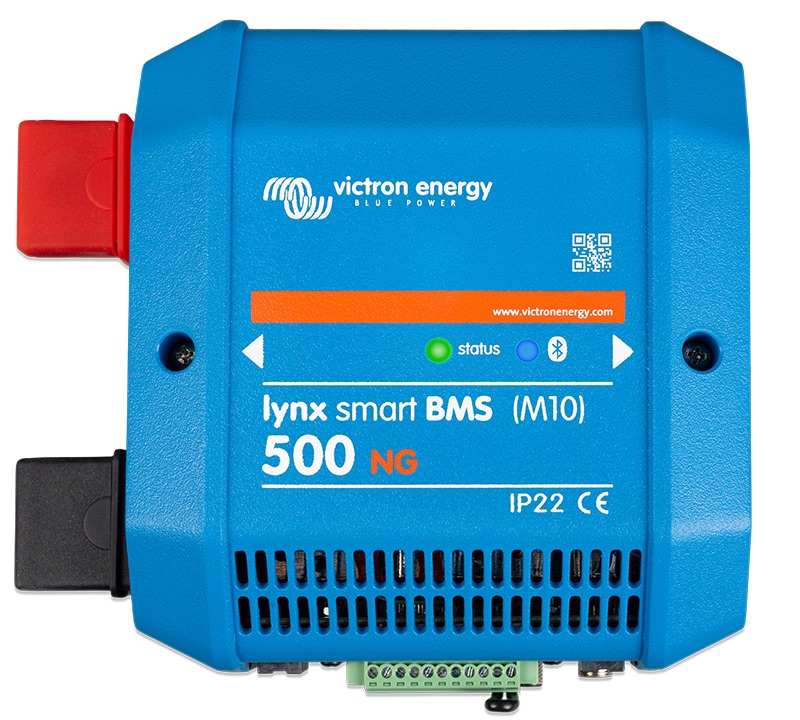
Decision snapshot
This is not a retail bundle or a blanket compatibility claim. Components are candidates; only the project specification is binding.
Decision page · updated September 2026
What the technology or architecture actually solves
The family has 500 A and 1000 A versions with an integrated main contactor. It supports 12, 24 and 48 V systems and up to 50 compatible Lithium NG batteries. The manufacturer states up to 384 kWh at 24/48 V. Parallel BMS banks can add capacity and redundancy, but each branch still needs defined protection, equal cable conditions and a controlled response to disconnection.
Lynx Distributor modules organise fused branches for batteries, inverters and chargers. GX supervision exposes SOC, alarms and diagnostics. A pre-alarm can shed non-critical loads before the contactor opens. The Lynx Smart BMS NG for Lithium NG must not be confused with earlier Victron BMS products for different battery families.
Practical business scenarios
larger 48 V banks for modular business ESS
separate battery banks where redundancy is required
microgrids with multiple inverters and central DC distribution
systems requiring measurement, pre-alarm and controlled isolation
Control and automation
Before the main contactor opens, supervisory logic may reduce power, shed non-critical loads or start a generator. Node-RED can process pre-alarm events but must not replace BMS protection. The operating dashboard should distinguish warning, BMS trip and fuse state so service teams do not confuse three different fault layers.
Weak points we test
The dominant risk in a high-current 48 V architecture is an underspecified DC bus. We verify continuous and transient current, voltage drop, selectivity, fault withstand, pre-charge and M10 connection torque. The design must allow one battery to be serviced safely and account for DC arc hazards.
Legal, regulatory and data context
BMS data can support battery operating evidence, but it does not replace documentation under the EU Batteries Regulation. The scope includes battery origin, conformity, model identity, service history, future passport data and end-of-life responsibility.
Frequently asked questions
Is Lynx Smart BMS NG compatible with any LiFePO4 battery?
No. It is designed for the Victron Lithium NG family; mixing BMS families is a design error.
Does a parallel BMS automatically provide redundancy?
Only when cabling, protection, inverters, controls and operating scenarios are also designed for redundancy.
Primary sources and fact check
Product data, firmware, certification and compatibility change. The exact model, revision, market and current documentation are reconfirmed before a binding design.
Related commercial and regulatory context
Related decision maps
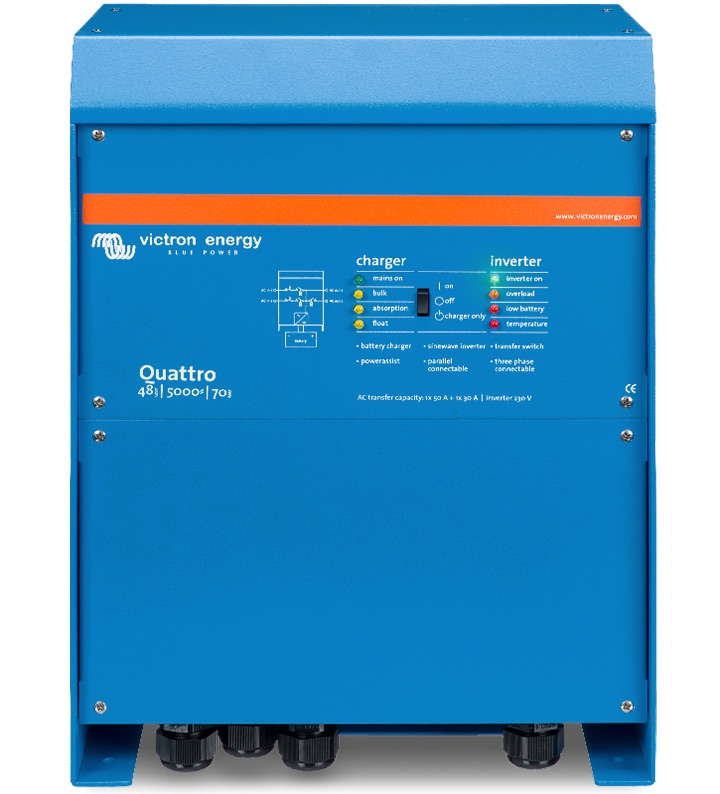
Victron · dual AC sources · controlled resilience
Victron Quattro for commercial ESS and backup systems
Quattro is not a complete battery system. It is a powerful building block for projects that must coordinate the grid, a generator, batteries, solar and critical loads without…
Open decision page →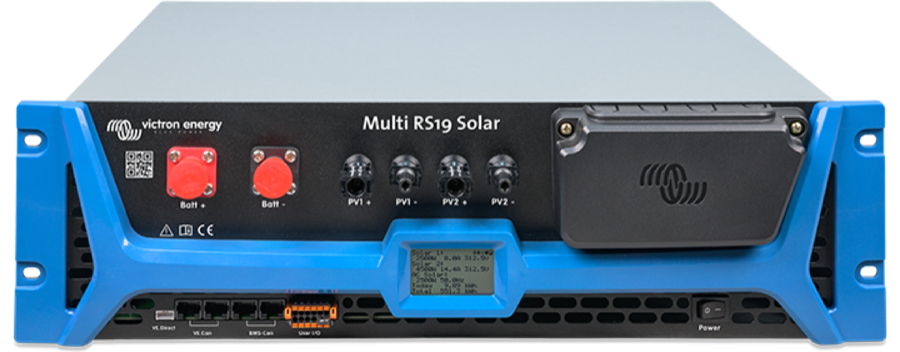
Victron · 48 V ESS · price-aware dispatch
Victron Multi RS, RS19 Solar and Dynamic ESS for business
Multi RS is a lightweight 48 V platform for retrofit storage, backup and controlled self-consumption. RS19 Solar adds a rack format and two independent MPPTs; the real system…
Open decision page →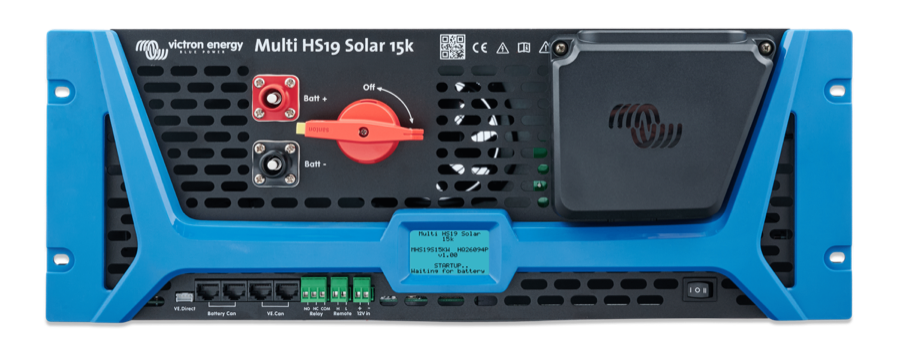
Victron · high voltage · three-phase ESS
Victron Multi HS19 Solar 15 kW for commercial BESS
Multi HS19 Solar 15k brings the Victron ecosystem into a high-voltage three-phase architecture. It is a candidate for compact C&I ESS only when the exact battery voltage window,…
Open decision page →First step without choosing a brand
Tell us what must not stop and what the system must deliver.
We start with data, project boundaries and the decision. The bill of materials follows power, energy, risk, legal and service review.