
Studer · modular inverters · grid and generator
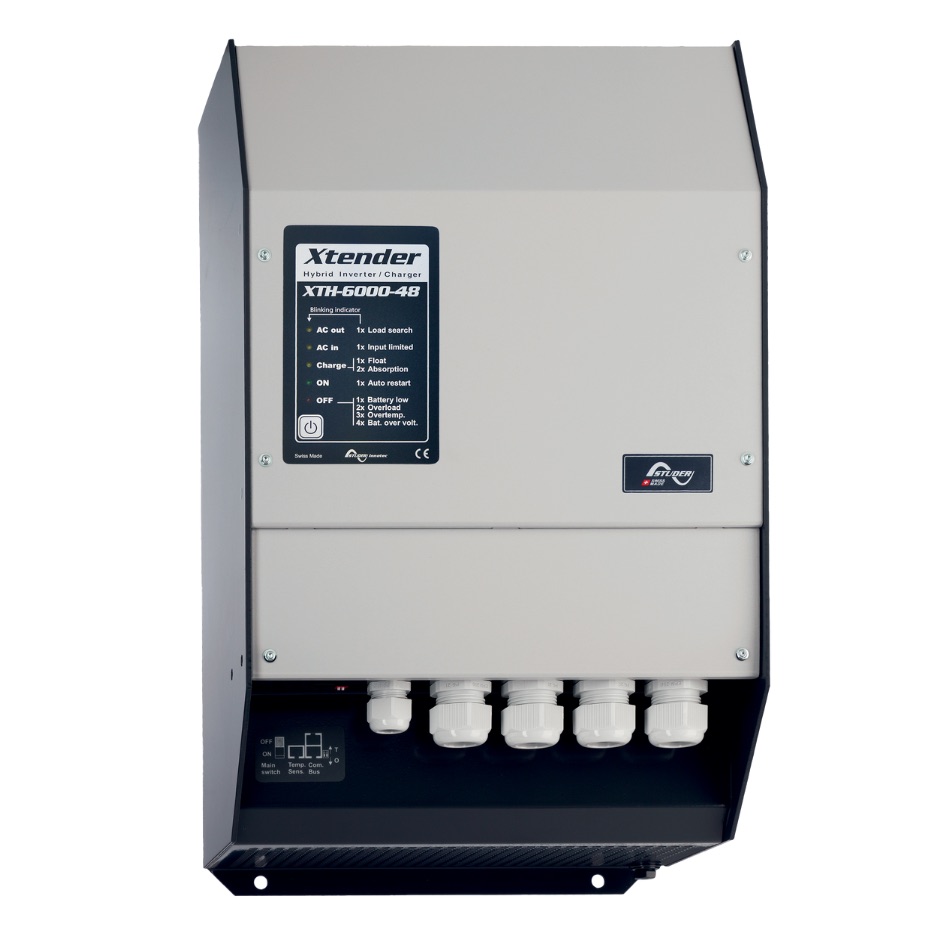
Studer Xtender XTS, XTM and XTH for industrial backup
The Xtender family remains relevant where robust low-voltage architecture, generator integration, long-term off-grid operation and modular single- or three-phase systems matter.
Decision snapshot
This is not a retail bundle or a blanket compatibility claim. Components are candidates; only the project specification is binding.
Decision page · updated September 2026
What the technology or architecture actually solves
XTS covers roughly 900–1400 VA, XTM 1.5–4 kVA and XTH about 3–8 kVA per unit. The family supports multi-unit operation, AC transfer, charging and Smart-Boost. Studer publishes system scaling up to 72 kVA; the exact limit depends on model, phase, firmware and the permitted topology.
The 2026 partner list still includes XTS 900-12, 1200-24 and 1400-48; XTM from 1500-12 to 4000-48; and XTH from 3000-12 to 8000-48. A system can therefore be selected by battery voltage and operating role rather than by randomly multiplying one model.
Practical business scenarios
24 kVA three-phase backup using XTH 8000-48 units
modular power for farms, telecoms or water infrastructure
generator microgrids with input limiting and Smart-Boost
off-grid sites prioritising repairability and service life
Control and automation
RCC and communication modules provide configuration, logging and remote visibility. In multi-unit systems we define master/slave roles, AC limits, generator start, SOC reserve and allowed load combinations. A separate operating sheet explains safe transfer to maintenance bypass.
Weak points we test
Modularity does not remove coordination. One firmware mismatch, unequal DC cabling or an undersized battery can destabilise the group. FAT therefore covers load sharing, loss of one phase, low AC-In voltage, half-period RMS events and re-synchronisation.
Legal, regulatory and data context
For business backup we determine whether the system operates in parallel with the grid, what export and connection limits apply and who owns protection settings. Off-grid scopes add operating safety, inspection, generator emissions/noise and operator responsibility.
Frequently asked questions
Should a project use XTM or XTH?
Power, overload, battery voltage, space, duty and expansion route matter more than price per VA.
Can the family build a 72 kVA system?
Studer publishes that system range, but topology and available functions must be confirmed for the exact models and firmware.
Primary sources and fact check
Product data, firmware, certification and compatibility change. The exact model, revision, market and current documentation are reconfirmed before a binding design.
Related commercial and regulatory context
Related decision maps
Victron · dual AC sources · controlled resilience
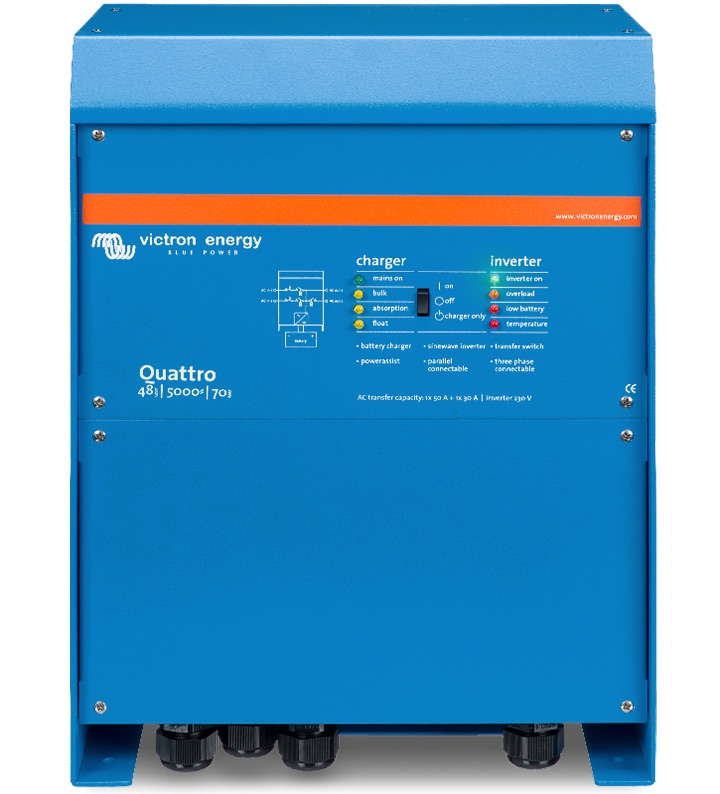
Victron Quattro for commercial ESS and backup systems
Quattro is not a complete battery system. It is a powerful building block for projects that must coordinate the grid, a generator, batteries, solar and critical loads without…
Open decision page →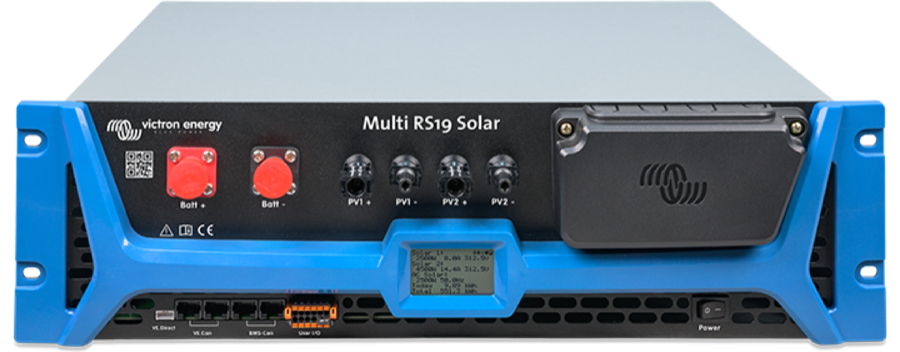
Victron · 48 V ESS · price-aware dispatch
Victron Multi RS, RS19 Solar and Dynamic ESS for business
Multi RS is a lightweight 48 V platform for retrofit storage, backup and controlled self-consumption. RS19 Solar adds a rack format and two independent MPPTs; the real system…
Open decision page →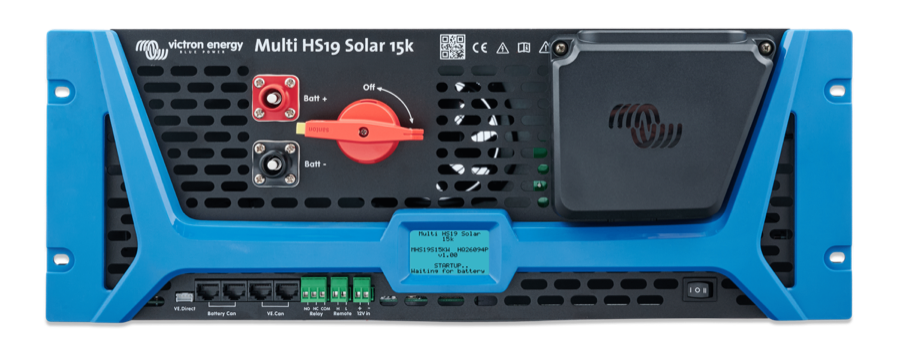
Victron · high voltage · three-phase ESS
Victron Multi HS19 Solar 15 kW for commercial BESS
Multi HS19 Solar 15k brings the Victron ecosystem into a high-voltage three-phase architecture. It is a candidate for compact C&I ESS only when the exact battery voltage window,…
Open decision page →First step without choosing a brand
Tell us what must not stop and what the system must deliver.
We start with data, project boundaries and the decision. The bill of materials follows power, energy, risk, legal and service review.