
Studer architectures · operating resilience
Studer commercial backup and microgrids: practical models
We consider Studer where long-term resilience, generator logic and serviceability matter more than the maximum number of cloud features. Four models cover a small critical circuit through to a modular industrial off-grid system.
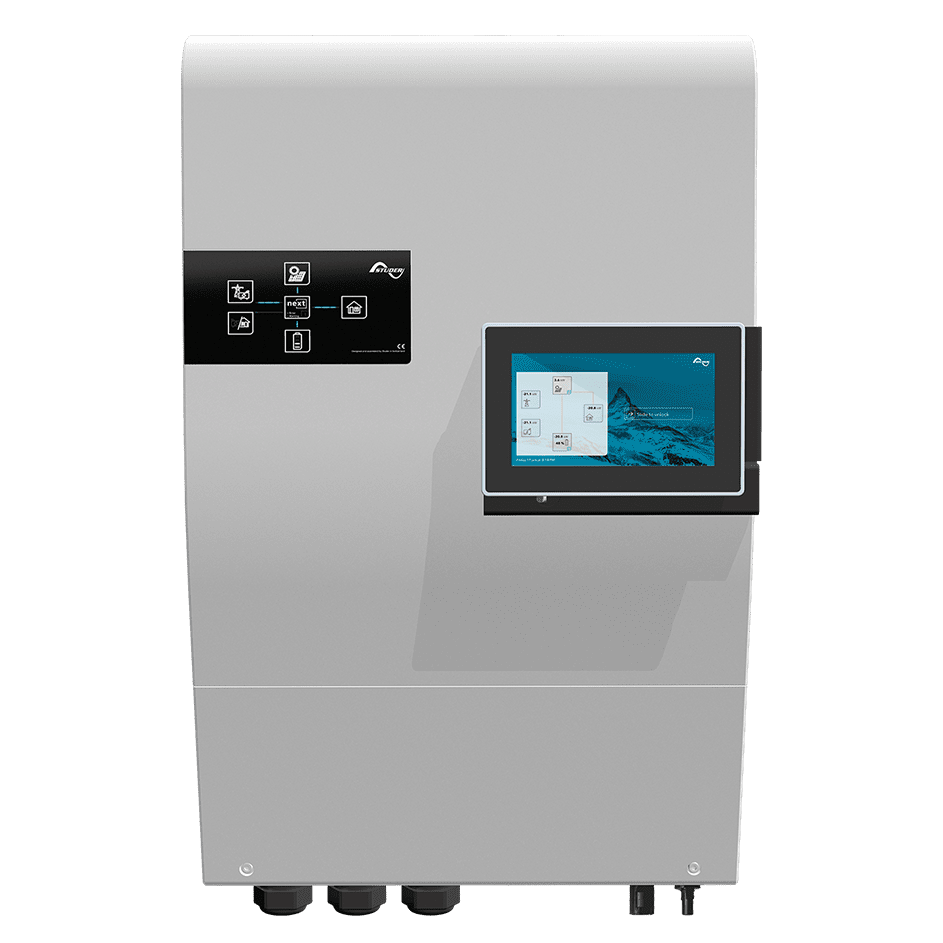
Decision snapshot
This is not a retail bundle or a blanket compatibility claim. Components are candidates; only the project specification is binding.
Decision page · updated September 2026
What the technology or architecture actually solves
Model A uses NX1 6500-48 for a tightly defined single-phase critical bus. Model B builds a three-phase hybrid around next3 16000-48. Model C uses three XTH 8000-48 units for an approximately 24 kVA three-phase generator-backed supply. Model D expands Xtender and Vario into serviceable blocks for a modular microgrid.
AC-In quality matters as much as nameplate power. Real operating events show the relevance of low input voltage, half-period RMS limits and repeated synchronisation. The project therefore tests grid and generator performance during real load steps, not only at no load.
Practical business scenarios
NX1: office, telecom or security systems
next3: three-phase PV–battery–grid–generator microgrid
3× XTH 8000: approximately 24 kVA critical bus
modular Xtender + Vario: farms, water and remote operations
Control and automation
The dispatch protects the generator from light loading and short cycling, the battery from deep discharge and the process from uncontrolled motor coincidence. Xcom and RCC provide data and configuration; critical logic retains a local default state and maintenance bypass.
Weak points we test
A catalogue package does not answer who restores the site on a Sunday night. Documentation includes spares, parameter export, alarm matrix, escalation, maximum repair time and limited-operation steps after a layer fails.
Legal, regulatory and data context
Off-grid and generator scopes add inspection, fire, fuel, noise, emissions and worker-safety issues. Parallel grid operation adds protection, connection, metering and possible storage licensing.
Frequently asked questions
Why Studer instead of a cheaper hybrid inverter?
Only when modularity, generator behaviour, resilience and service strategy deliver measurable value.
Is the 24 kVA model a standard package?
No. Loads, battery, phases, generator, protection and autonomy change the final architecture.
Primary sources and fact check
Product data, firmware, certification and compatibility change. The exact model, revision, market and current documentation are reconfirmed before a binding design.
Related commercial and regulatory context
Related decision maps
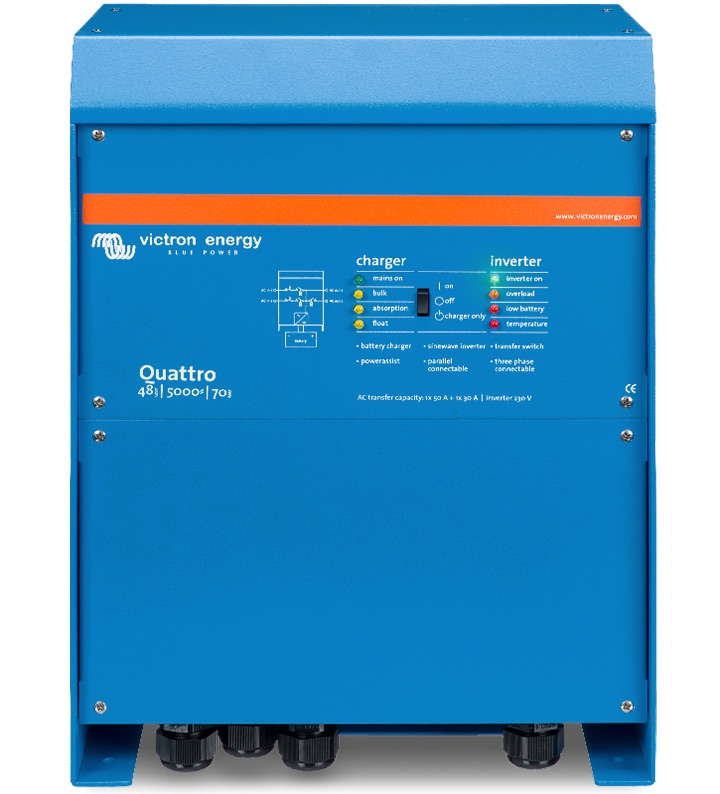
Business architectures · not product bundles
Victron commercial ESS and microgrids: four design models
Four models illustrate how Victron components can address different operating problems. They are not price packages or universal bills of materials; power, battery,…
Open decision page →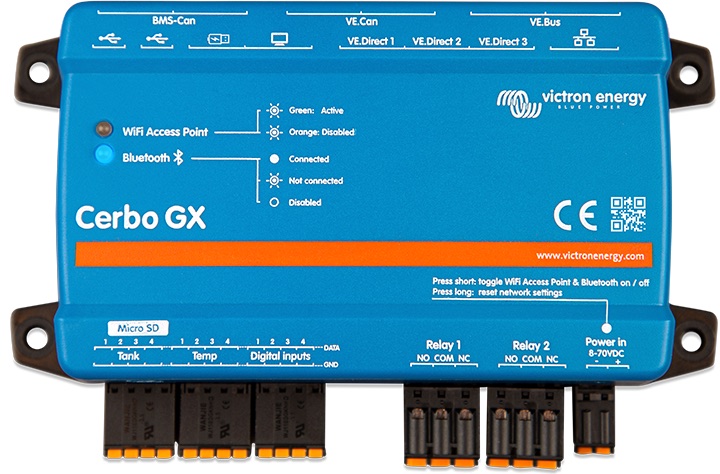
EMS · process automation · local fallback
Node-RED automation for commercial energy, solar and batteries
Energy automation must make money or reduce risk. We design it as an operating process with measurement, limits, ownership and rollback—not as an isolated flow nobody…
Open decision page →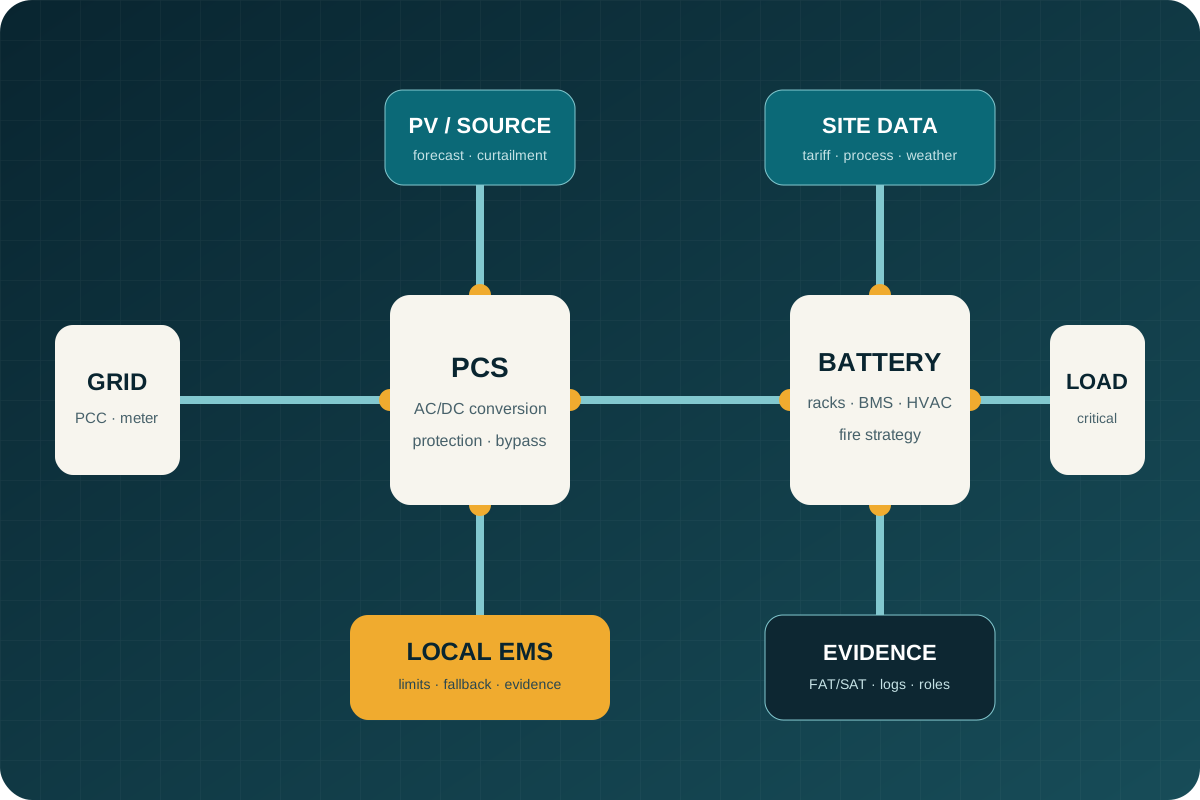
C&I BESS · technical and legal due diligence
Industrial BESS design, EU compliance, NIS2 and EMS
A large battery system is not a container with a kWh label. It is an energy asset, a data system, a fire-safety object, a set of contracts and an investment whose return depends…
Open decision page →First step without choosing a brand
Tell us what must not stop and what the system must deliver.
We start with data, project boundaries and the decision. The bill of materials follows power, energy, risk, legal and service review.