
C&I BESS · technical and legal due diligence
Industrial BESS design, EU compliance, NIS2 and EMS
A large battery system is not a container with a kWh label. It is an energy asset, a data system, a fire-safety object, a set of contracts and an investment whose return depends on a clear hierarchy of use cases.
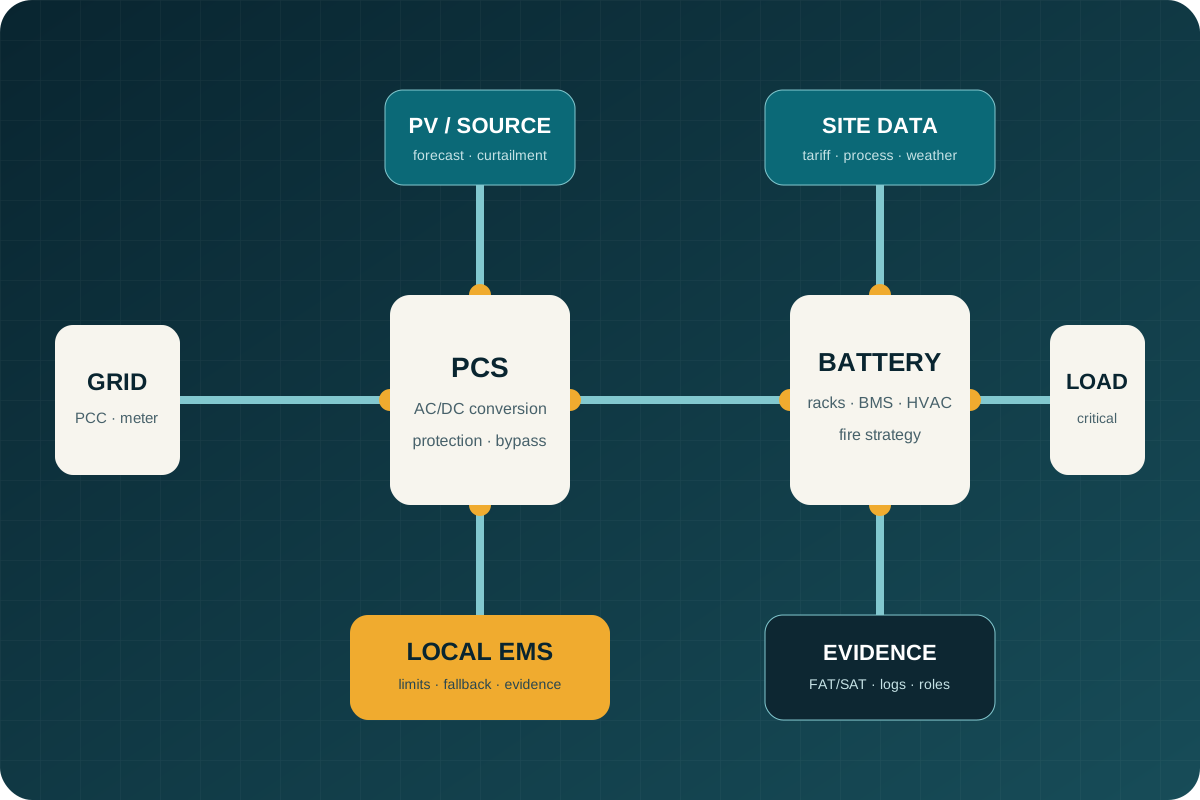
Decision snapshot
This is not a retail bundle or a blanket compatibility claim. Components are candidates; only the project specification is binding.
Decision page · updated September 2026
What the technology or architecture actually solves
A 100 kW/200 kWh model can address short peaks and selected backup. A 250 kW/500 kWh model can combine peak shaving with PV capture. A 500 kW/1 MWh system requires full PCS, EMS, transformer, protection and fire engineering. A 1 MW/2 MWh asset adds connection, licensing, aggregation, dispatch contracts, degradation and auxiliary demand. A 1C or 0.5C ratio is a model, not a recommendation.
Czech law has explicitly recognised electricity storage since October 2025. ERÚ guidance updated in July 2026 states that licensing is not defined by one threshold: ERÚ distinguishes business purpose, power, grid connection and links to other storage at the same point, with statutory exceptions including some generation-license holders within a 1.2 power ratio. Every topology needs project-specific confirmation.
Practical business scenarios
reserved-capacity and quarter-hour demand reduction
PV self-consumption and export management
critical-process backup with a defined recovery time
flexibility, aggregation and price dispatch in separated scenarios
Control and automation
The EMS hierarchy is safety, grid limit, critical reserve, operating constraints and only then commercial optimisation. Each setpoint is checked against PCS and battery response; an unmet command becomes an alarm. The data model includes energy, power, SOC, SOH, temperature, alarms, import/export and auxiliary consumption.
Weak points we test
The common commercial weakness is counting the same capacity several times: one MWh is expected to trade, cover a long outage, shave peaks and provide flexibility simultaneously. The model therefore time-separates use cases and includes SOC reserve, degradation, availability and non-delivery consequences.
Legal, regulatory and data context
EU Regulation 2023/1542 introduces a battery passport from 18 February 2027 for industrial batteries above 2 kWh placed on the market or put into service. NIS2, the Cyber Resilience Act and the Data Act affect cyber, product and data workstreams. We also map connection, licensing, building/fire, waste and contractual responsibility. This is not blanket legal advice; formal opinions are provided with qualified counsel.
Frequently asked questions
Does a 100 kW BESS need a Czech licence?
It depends on installed power, connection, other storage at the point and statutory exceptions. Current ERÚ guidance and the exact topology must be checked.
Does the battery passport cover industrial BESS?
From 18 February 2027 it covers industrial batteries above 2 kWh placed on the market or put into service, with tiered access to data.
Primary sources and fact check
Product data, firmware, certification and compatibility change. The exact model, revision, market and current documentation are reconfirmed before a binding design.
- Solární Panely.CZ – original vendor-neutral system diagram ↗
- ERÚ – ukládání elektřiny, aktualizace 20. 7. 2026 ↗
- EUR-Lex – Regulation (EU) 2023/1542 ↗
- EUR-Lex – Cyber Resilience Act ↗
- European Commission – Data Act ↗
- NÚKIB – průvodce zákonem č. 264/2025 Sb. ↗
- European Commission – Electricity Market Design ↗
Related commercial and regulatory context
Related decision maps
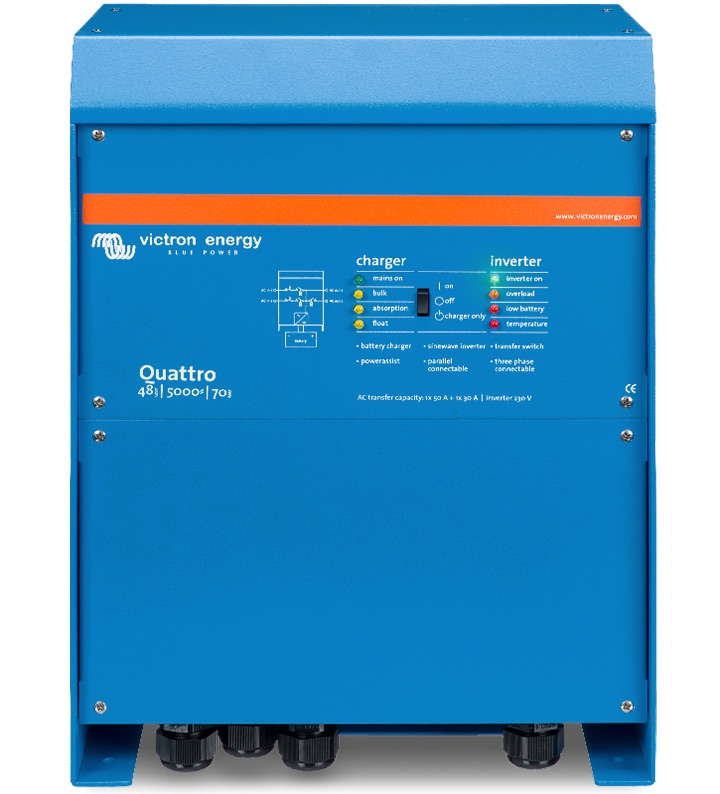
Business architectures · not product bundles
Victron commercial ESS and microgrids: four design models
Four models illustrate how Victron components can address different operating problems. They are not price packages or universal bills of materials; power, battery,…
Open decision page →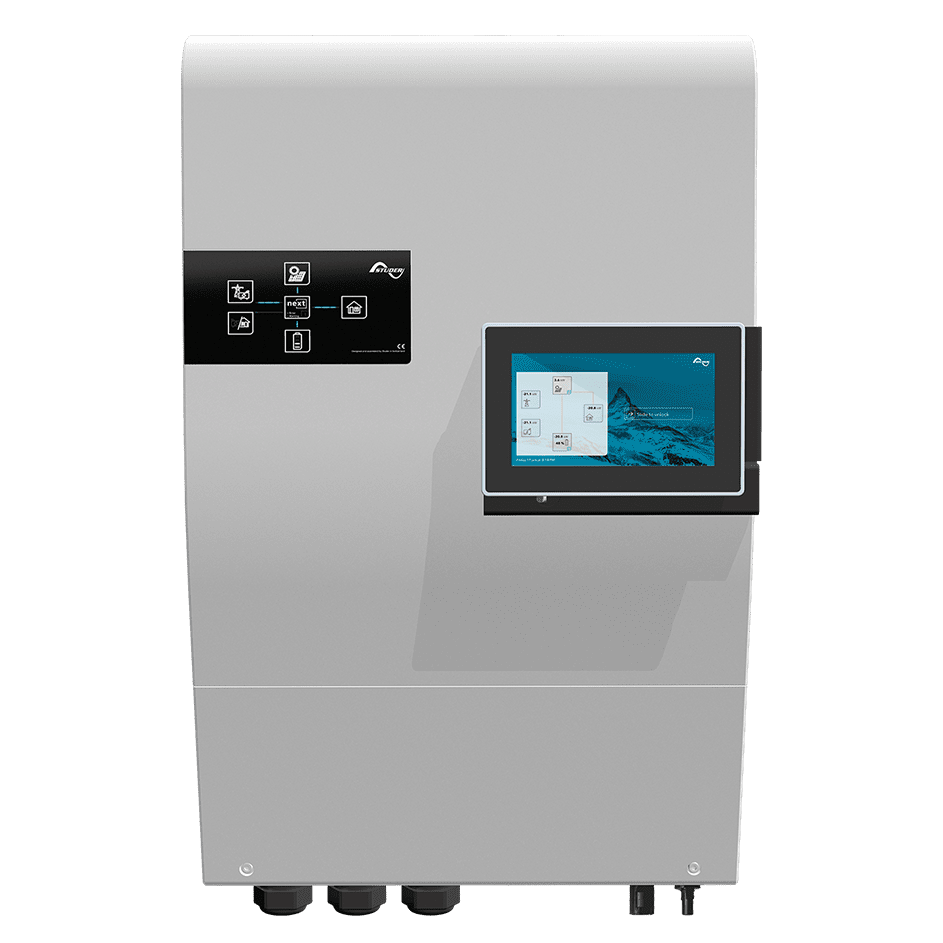
Studer architectures · operating resilience
Studer commercial backup and microgrids: practical models
We consider Studer where long-term resilience, generator logic and serviceability matter more than the maximum number of cloud features. Four models cover a small critical…
Open decision page →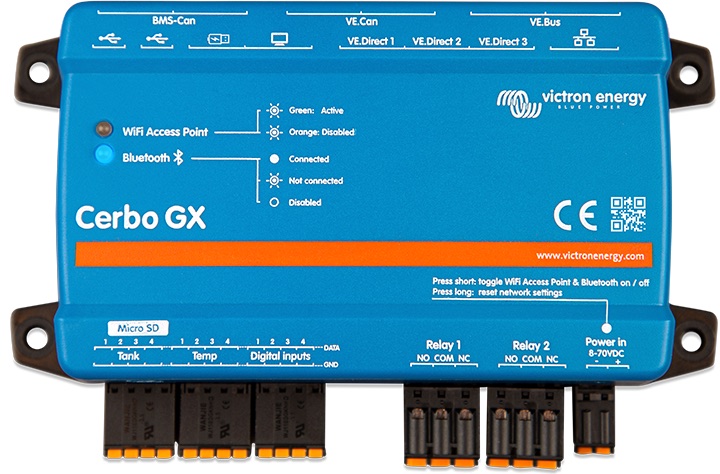
EMS · process automation · local fallback
Node-RED automation for commercial energy, solar and batteries
Energy automation must make money or reduce risk. We design it as an operating process with measurement, limits, ownership and rollback—not as an isolated flow nobody…
Open decision page →First step without choosing a brand
Tell us what must not stop and what the system must deliver.
We start with data, project boundaries and the decision. The bill of materials follows power, energy, risk, legal and service review.