
Content and sources checked 3 September 2026
HESS is not merely another name for solar plus a battery
In the technical sense, hybrid storage combines elements with different response and energy characteristics: for example a lithium-ion battery with a supercapacitor, electrical storage with thermal storage, or clearly separated storage and controllable-process layers. A conventional PV-plus-battery system is not automatically a HESS. We use the term only where two dynamics, their interface and dispatch logic can be defined.
The fast layer may absorb power spikes, regenerative events, motor starts or short control actions. The energy layer works over minutes or hours. Correct allocation can reduce battery stress, but it also adds converters, controls, protection and service interfaces. That additional complexity needs a measurable benefit.
Where hybrid storage can fit
Candidates include cranes, presses, rail or port equipment, charging hubs, mines, generator microgrids and factories with repeated short peaks above a steadier energy demand. Electrical storage may also be coordinated with heat or cold storage where process timing, rather than electricity price alone, sets the value.
We do not select HESS because it is fashionable. High-resolution data identifies peak duration, frequency, energy, permissible interruption and daily energy movement. We then compare a single BESS, a HESS and alternatives such as load control or grid-capacity changes.
Two physical systems, one control responsibility
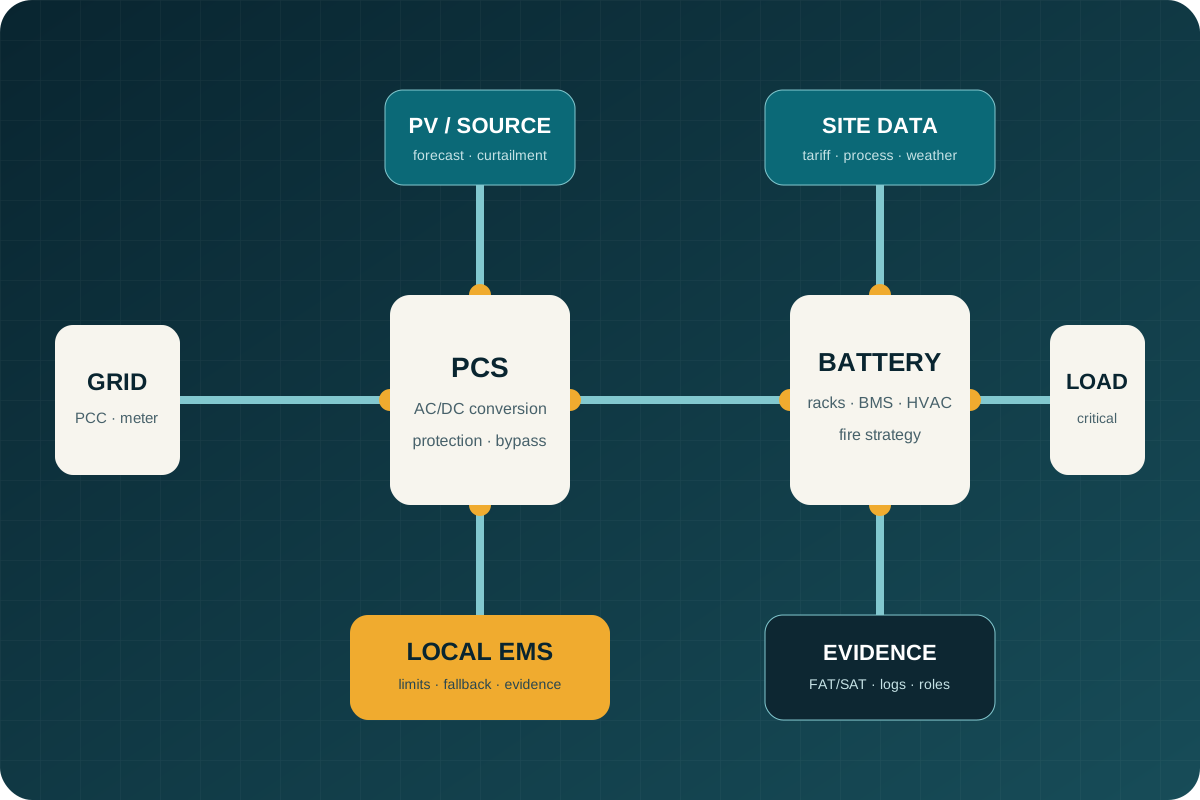
The EMS decides which layer reacts, how reserve is restored and what happens when one part is unavailable. A fast layer protects the battery only when measurement, filters, latency and limits are aligned. Poor coordination can increase losses or create oscillating setpoints.
Requirements include measurable priorities, watchdogs, a local fallback and manual operation. The data contract defines signal names, units, frequency, time synchronisation, quality and stale-data behaviour. The Data Act strengthens the user’s position around connected-product data, but usable APIs still have to be specified and tested. EU Data Act ↗
Economics and degradation without double counting
The model includes every conversion path, auxiliary consumption, replacement of the fast layer, service and additional capital cost. Claimed battery-life extension is not accepted as a brochure percentage; current, depth of discharge, temperature and warranty conditions are compared with a reference BESS.
European market reform increases the value of flexibility, while actual revenue still depends on contracts, aggregators, availability and penalties. HESS must deliver value after losses and cost, without consuming reserve promised for backup or process continuity. EU electricity market design ↗
How we accept a HESS
FAT uses recorded or simulated site profiles to test allocation between layers, saturation, communications loss, power limits and safe fallback. SAT repeats critical scenarios with site metering and real loads. KPIs include peak intervention, delivered energy, latency, reserve recovery, losses and protective trips.
We recommend HESS only when its advantage over a simpler design survives sensitivities for price, degradation, availability and service. Otherwise a simpler BESS or load-control project is the better engineering decision.
Frequently asked questions
Is every PV-plus-battery project a HESS?
No. The term is useful only when different storage characteristics and their separate controlled roles are real.
Does HESS automatically extend battery life?
No. Site data, controls and comparative current and temperature stress must demonstrate the benefit.
Verified sources and claim boundaries
Checked 3 September 2026. Links point to primary legal, authority or manufacturer sources. Regulatory content is technical context, not project-specific legal advice.